
A gravel bike is the one bike that has to do several jobs: fast enough on tarmac, stable enough on loose surfaces, and strong enough to carry luggage. The Meihanda gravel range covers that spread from US$619 to US$2,300, built in our own factory in Foshan, China and sold factory-direct — so you are buying from the production line rather than through a distributor network.
At a glance
Models
Frame options
Drivetrains
Sizing
Sold
The Meihanda gravel range
-
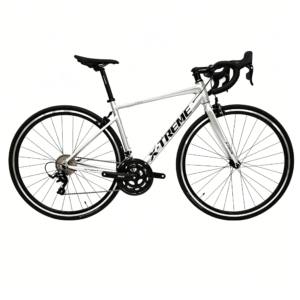
Meihanda Knight06
Price range: $619.00 through $699.00 Select options This product has multiple variants. The options may be chosen on the product page -
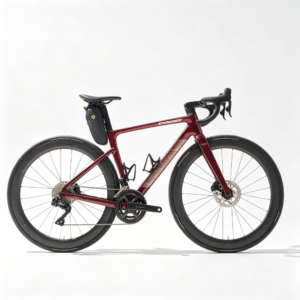
Meihanda Lucky Carbon Fiber Road Bicycle
$889.00 Select options This product has multiple variants. The options may be chosen on the product page -
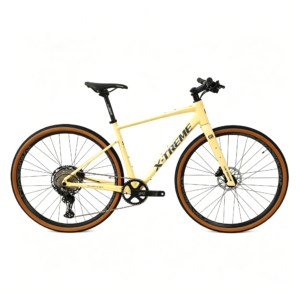
Meihanda Phantom Flat Bar Gravel Road Bike
$918.00 Select options This product has multiple variants. The options may be chosen on the product page -
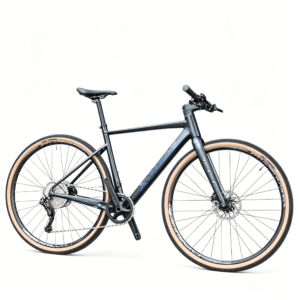
Meihanda Xtreme Phantom P10
$2,300.00 Select options This product has multiple variants. The options may be chosen on the product page -
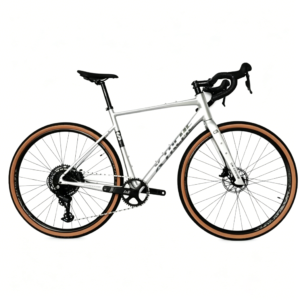
Meihanda Xtreme Phantom Series
Price range: $699.00 through $959.00 Select options This product has multiple variants. The options may be chosen on the product page -
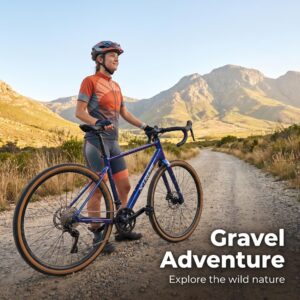
X-TREME Gravel Road Bike, UCI Certified Frame, 7005 Aluminum + Carbon Fiber, Shimano Groupset
- Meihanda Knight06 — US$619
- Meihanda Xtreme Phantom Series — US$699
- Meihanda Lucky Carbon Fiber Road Bicycle — US$889
- Meihanda Phantom Flat Bar Gravel Road Bike — US$918
- X-TREME Gravel Road Bike, UCI Certified Frame, 7005 Aluminum + Carbon Fiber, Shimano Groupset — US$1400
- Meihanda Xtreme Phantom P10 — US$2300
What actually makes a bike a gravel bike
Three things separate a gravel bike from a road bike, and only one of them is marketing. Tyre clearance is the first: a gravel frame has to accept wider rubber than a road frame so you can run lower pressures on loose ground. Geometry is the second: a longer, slacker, more stable front end keeps the bike predictable when the surface moves under you. Mounts are the third: without rack and bag mounts, a gravel bike is really just a road bike with wide tyres.
- Tyre clearance wide enough for mixed surfaces, not just 25 mm road rubber
- Geometry built for control on loose ground rather than outright aerodynamics
- Mounts for bottles, bags and racks so the bike can carry its own weight
- A gear range that still works when the road tilts up and the surface turns to grit
How to choose: the five things that actually matter
1. Frame material and what it costs you
Aluminium is stiffer, cheaper to repair and cheaper to replace. Carbon is lighter and damps vibration better. On the Meihanda gravel range both are offered: the 7005 aluminium platforms start at US$619, and the carbon fibre platforms sit higher in the range. If you ride rough surfaces often and want a bike you can throw in a van without worrying, aluminium with a carbon fork is the sensible middle ground — you get the comfort benefit at the front where it matters most.
2. Drivetrain: how many gears, and how they are shifted
Gravel gearing has moved from road doubles towards wide-range single-ring setups, and the Meihanda range covers both. Cheaper builds use mechanical shifting with 9 to 18 speeds. Higher builds move to 11, 12 and 13 speeds, and the top of the range uses electronic shifting. More gears is not automatically better: a well-spaced 11-speed setup with the right range is more useful on gravel than a 22-speed road double that runs out of low gearing.
3. Tyre clearance and the rubber you intend to run
Decide which tyres you actually want before choosing the frame, not after. A bike bought for 32 mm tyres and then pushed onto 45 mm gravel rubber will rub, and one bought for 45 mm will feel sluggish on the road. Our product pages list the sizes each model is offered in, and we are happy to confirm clearance for a specific tyre before you order.
4. Sizing
Getting the size wrong is the single most expensive mistake in buying a bike. Meihanda models are listed in S, M, L and XL, and some are listed in millimetre frame sizes instead. If you are between sizes, tell us your height, inside leg and the bike you ride now, and we will confirm the right one — sizing advice comes from the same factory that builds the frame.
5. Brakes
Hydraulic disc brakes have become the default on gravel for a reason: they keep working when the rims are wet and muddy, and they need less hand force on long descents. Every disc-brake build in the Meihanda gravel range uses hydraulic actuation.
Buying direct from the factory
Meihanda is a bicycle manufacturer, not a reseller. Frames are produced and QC-inspected in our own factory in Foshan, China, then sold factory-direct, which removes the distributor margin that normally sits between a factory and a rider. The same production line also supplies wholesale, bulk and OEM/ODM orders, with custom specification on paint, decals and components.
That has two practical consequences for a gravel buyer. First, the specification on the page is the real specification rather than a retail-packaged version of it. Second, if you want a build that is not listed — a different groupset, a different colour, a particular tyre — you can ask for it, because we are the people who build it.
Frequently asked questions
Can I use a gravel bike as a road bike?
Yes. A gravel bike with narrower, faster-rolling tyres and a bit more pressure is a comfortable road bike — the geometry is more upright than a race bike, which most riders find easier over long distances. You give up some top-end speed in exchange for the ability to leave the tarmac.
Should I choose aluminium or carbon?
Choose aluminium if you want lower cost, easier repair and no worry about impact damage. Choose carbon if low weight matters more than cost. If you want a single recommendation for mixed-surface riding, aluminium with a carbon fork is the best compromise in our range.
How do I know which size to order?
Tell us your height and inside leg, and the size of the bike you ride now. With those three numbers we can confirm the size before you order. Sizing advice is free and comes from the factory.
Do you ship internationally?
Yes. Orders are processed in 2–5 business days. Standard tracked international delivery takes 10–20 business days, and express shipping (DHL, FedEx or UPS) takes 5–10 business days.
Can I order a custom specification or my own brand?
Yes. OEM/ODM orders are supported with custom frame layup, paint, decals and component choice, and the same factory handles wholesale and bulk orders. Minimum quantities apply.
Shipping and returns
- ✓ Ships in 2–5 business days. Standard tracked delivery 10–20 days; express (DHL / FedEx / UPS) 5–10 days.
- ✓ Returns handled by email. We send a return authorisation within 2 business days and approved refunds are paid in 5–10 business days.
Read the full policies: Shipping policy · Return & refund policy.
Where to go next
- Gravel bikes under US$1,000
- Aluminium gravel bikes
- 12-speed gravel bikes
- Shop all gravel bikes
- OEM and ODM production
- How we test and inspect every frame
