

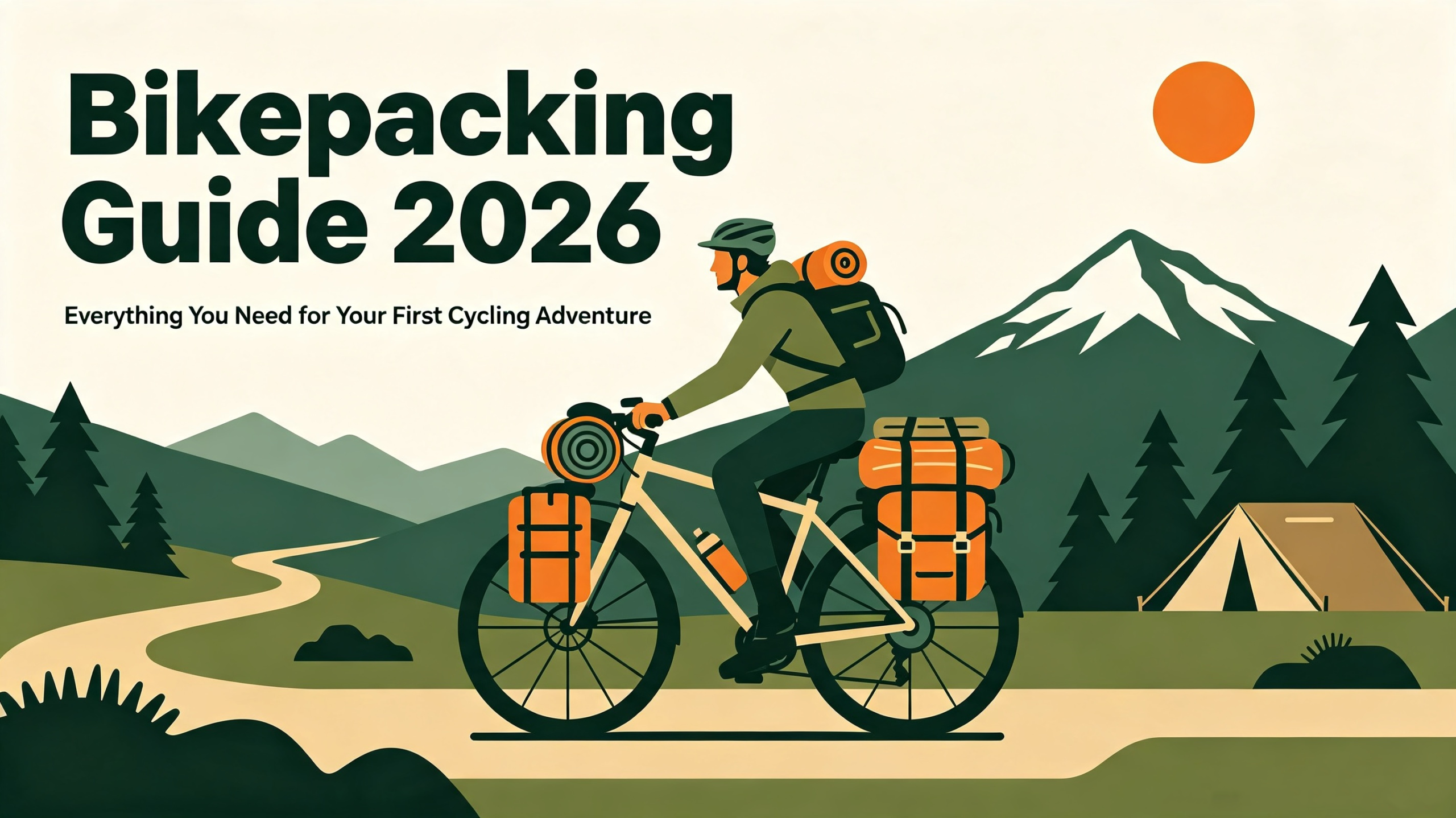
There is a distinct freedom that comes with bikepacking—the art of blending cycling with minimalist camping. Unlike traditional travel, bikepacking allows you to escape the congestion of city traffic and dive deep into nature, accessing remote trails that cars can never reach. As we move into 2026, the trend of cycling travel continues to surge, with more riders seeking adventure off the beaten path.
Whether you are a seasoned road cyclist looking for a new challenge or a beginner mountain biker eager to explore, this comprehensive bikepacking guide is designed to help you transition from day rides to multi-day adventures. In this article, we will cover everything from choosing the right bicycle and planning your route to essential bike travel essentials and safety tips.
By the end of this guide, you will have the confidence to load up your bike and disappear into the wilderness for a weekend—or a month—of exploration.
What is Bikepacking and Why is it Trending?
Bikepacking is essentially backpacking on a bike. It involves riding over varied terrain—paved roads, gravel paths, or technical mountain bike trails—and carrying your camping gear with you. It sits at the intersection of bike touring and ultralight backpacking.
The Rise of Adventure Cycling
In recent years, the cycling industry has seen a massive shift towards adventure and gravel riding. According to recent cycling travel statistics, the demand for versatile bikes like gravel and adventure rigs has skyrocketed. Why? Because riders are craving more than just fitness; they want experiences.
Bike Touring vs. Bikepacking
While the terms are often used interchangeably, there is a slight difference:
- Bike Touring: Traditionally involves heavier loads, panniers (bags that hang off racks), and mostly paved roads. It focuses on long-distance travel.
- Bikepacking: Emphasizes lightweight gear, frame bags (bags that attach directly to the bike frame), and often involves off-road riding.
For many modern cyclists, bikepacking is preferred because the lighter load allows for more technical riding. If you have been looking at the best mountain bike for beginners with the intent of hitting trails, bikepacking is the natural next step after mastering your mountain bike skills.
How to Choose the Right Bike for Bikepacking
One of the most critical decisions you will make is selecting the right machine. The “best touring bike” depends entirely on the terrain you plan to cover.
Gravel Bikes: The Ultimate Adventure Rigs
If your route involves a mix of paved roads and fire roads, a gravel bike is often the top choice. When looking at the best gravel bike 2026 models, look for features like:
- Durability: Robust frames that can withstand heavy loads.
- Tire Clearance: Ability to fit wider tires (40mm+) for comfort and grip.
- Mounting Points: Plenty of points for attaching cages and bags.
The debate of gravel bike vs road bike often comes up here. While a standard road bike is faster on tarmac, a gravel bike’s geometry is more stable and upright, making it far superior for loaded touring.
Mountain Bikes: For the Trail Explorers
For those planning to tackle technical singletrack, a mountain bike is non-negotiable. Both hardtail mountain bike and full suspension mountain bike options work, though hardtails are often preferred for bikepacking due to their simplicity, lower weight, and ease of carrying gear.
- If you are just starting out, a 29 inch mountain bike is an excellent choice. The larger wheel diameter rolls over obstacles more easily and maintains momentum better than smaller wheels, which is crucial when your bike is weighed down with gear.
Electric Bikes: Leveling the Playing Field
Can you go bikepacking on an e-bike? Absolutely. The electric bike review trends for 2026 show that long-range e-bikes are opening up bikepacking to a wider audience. An electric mountain bike allows you to cover more miles with less fatigue, making steep climbs with heavy loads manageable. However, you must plan your route around charging stops or invest in a solar charging setup.
Frame Material Considerations
When choosing a bike, frame material matters.
- Aluminum: Affordable and durable, common on many best mountain bike for beginners lists.
- Steel: The classic choice for touring. It offers a smooth ride quality and is repairable in remote areas.
- Carbon Fiber: Found on high-performance carbon road bike or gravel models. While light, it requires careful packing to avoid cracking under point loads from bags.
How to Plan Your First Bikepacking Route
Planning is where the adventure truly begins. A well-planned route ensures safety and enjoyment, while a poorly planned one can lead to unnecessary hardship. For beginners, the key is to start small.
Start with a Weekend Trip
Don’t attempt a transcontinental crossing on your first try. Look for an overnight loop that starts and ends near your home. This minimizes the risk and allows you to test your gear without a massive commitment.
Use Technology for Navigation
Gone are the days of relying solely on paper maps. Modern bikepackers rely heavily on digital tools.
- Apps: Komoot and RideWithGPS are industry standards for planning. They allow you to filter routes based on surface type (paved vs. unpaved).
- Hardware: A dedicated cycling computer is invaluable. Unlike a phone, it is weather-resistant, has a longer battery life, and is easier to read in sunlight. Models from Wahoo or Garmin offer specific bikepacking features.
Terrain and Distance
When calculating distance, remember that loaded bikes are heavier. A distance that might take you two hours on a road ride could take four hours on a loaded 29 inch mountain bike on trails. Factor in elevation gain—climbing with 20kg of gear requires significantly more effort.
Training for the Distance
Before you leave, ensure your body is ready. Following a structured road cycling training plan is a great way to build a base level of fitness. Focus on cycling endurance training by doing back-to-back long rides on weekends. This simulates the fatigue of multi-day touring. If you want to improve cycling speed, interval training helps, but for bikepacking, steady endurance is more important than raw speed.
Essential Cycling Gear Checklist: What to Pack
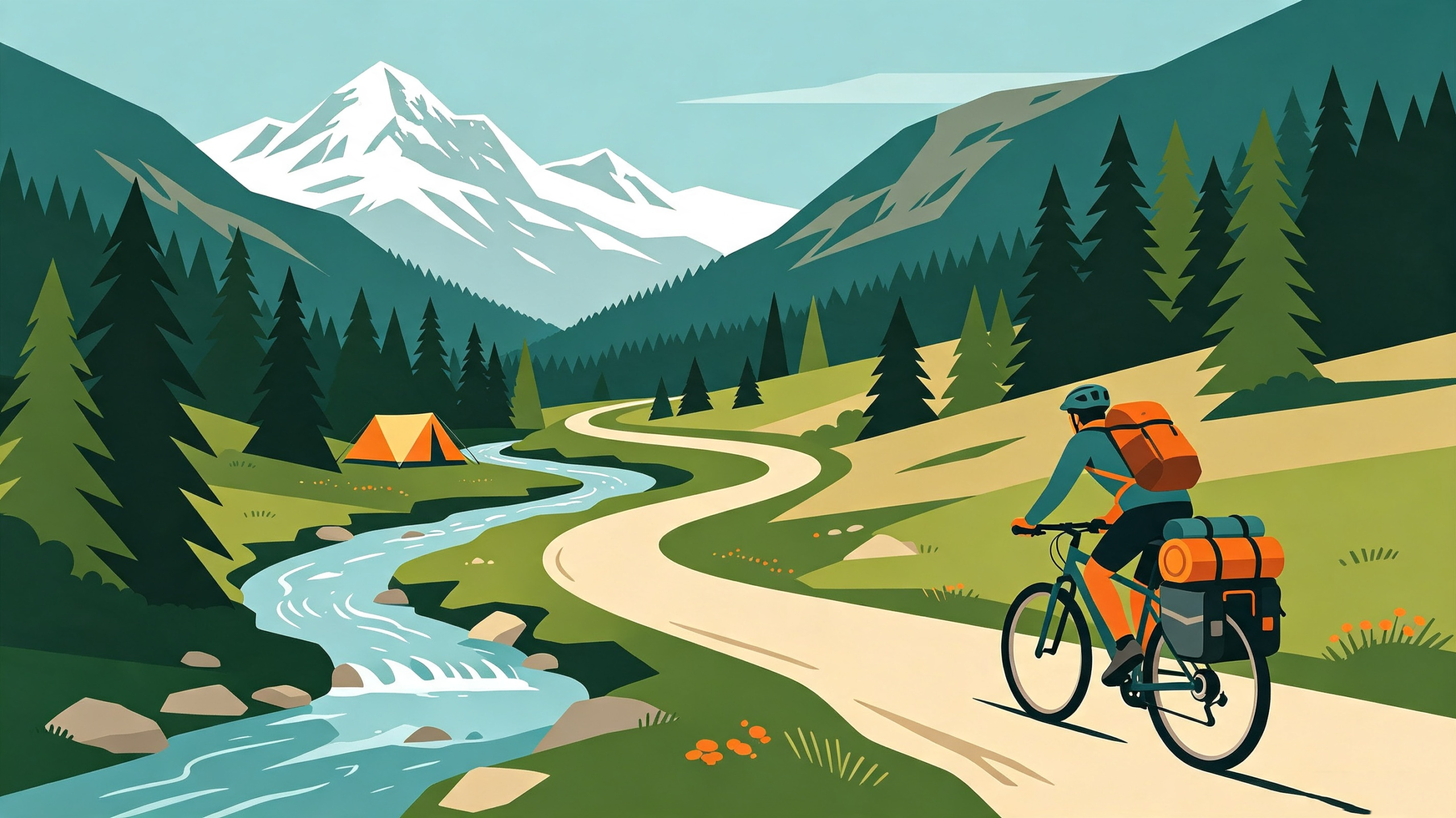
Packing for bikepacking is an art form. The goal is to carry everything you need to survive without carrying so much that you kill the joy of riding. Here is your bike travel essentials checklist.
The Bag System
Bikepacking relies on a soft bag system that attaches to your bike:
- Frame Bag: Fits inside the main triangle. Best for heavy, dense items like tools, food, and water.
- Handlebar Bag: Best for lightweight, bulky items like your tent poles or sleeping bag.
- Seat Pack: Great for sleeping gear and clothes.
Camping and Sleeping Gear (Cycling Camping Gear)
Your shelter is your home in the wild.
- Tent/Bivy/Hammock: Ultralight tents are popular. If you are on a strict budget, a simple bivy sack works, but offers less protection.
- Sleeping Bag: A compressible down sleeping bag is the gold standard.
- Sleeping Pad: Crucial for insulation from the cold ground.
- Stove: A small canister stove for boiling water for meals and coffee.
Clothing Systems
Dress for the weather but prepare for changes. Layers are key.
- A quality cycling jersey and shorts with chamois padding.
- A lightweight, waterproof shell jacket (essential for unexpected rain).
- Arm and knee warmers for temperature regulation.
- A comfortable pair of off-bike sandals or shoes for camp.
Smart Cycling Gadgets and Safety
In 2026, technology plays a huge role in safety.
- GPS Bike Tracker: Security is a top priority, especially when stopping in towns. A GPS bike tracker hidden on your frame allows you to monitor your bike’s location if it gets stolen, and some models offer crash detection alerts to loved ones.
- Lighting: A high-lumen front light is mandatory, not just for night riding but for visibility in tunnels or tree cover.
- Power: A dynamo hub (generates power as you pedal) or a high-capacity power bank is essential to keep your cycling computer and phone charged.
Complete Bicycle Maintenance Checklist for Touring
Reliability is the most important feature of any bikepacking rig. Unlike a casual Sunday ride where a mechanical issue just means calling a friend for a lift, a breakdown in the middle of nowhere can be dangerous. Before you depart, you must go through a comprehensive bike maintenance checklist.
Pre-Trip Inspection
Two weeks before your trip, give your bike a full service. This allows time to order parts if needed.
- Tires: Check for cuts, embedded glass, and tread wear. For bikepacking, consider installing tire liners or using sealant if you run tubeless.
- Brakes: Knowing how to fix bike brakes on the trail is a vital skill. Check your pad wear. If you have hydraulic brakes, ensure there are no leaks and the levers feel firm.
- Drivetrain: Inspect your chain for stretch using a chain checker. A worn chain can snap under the heavy load of touring gear.
Tools Every Cyclist Needs
You don’t need a full workshop, but you do need a specific set of tools to handle common issues. Every bikepacker should carry:
- Multi-tool with a chain breaker.
- Spare tubes (at least two) and patch kit.
- Tire levers and a high-volume mini-pump.
- Quick links for chain repair.
- Duct tape and zip ties (the universal fix-it kit).
On-Trail Maintenance
Every evening, perform a quick 5-minute check.
- Clean and Lube: Dust and grit are the enemies of drivetrains. Carry a small bottle of lube. Proper bike chain lubrication reduces friction and prevents premature wear. If your chain is squeaky, it’s already too late.
- Check Bolts: Vibration from off-road riding can loosen bolts. Use your multi-tool to check stem bolts, rack mounts, and bottle cage screws.
- Wipe Down: If riding in mud or rain, wipe down your bike to prevent corrosion.
Understanding how often should I service my bike depends on conditions. In wet, muddy conditions, you might need to lube your chain every day. In dry desert conditions, every 2-3 days is sufficient.
Common Beginner Bikepacking Mistakes
Even with the best gear and training, beginners often fall into the same traps. Avoid these pitfalls to ensure your first adventure is memorable for the right reasons.
Mistake #1: Overpacking
This is the cardinal sin of bikepacking. It’s tempting to pack “just in case” items—extra clothes, multiple spare tubes, heavy cooking stoves. Remember, every gram you carry requires energy to move.
- Fix: Lay all your gear out before packing. Remove anything you aren’t 100% sure you will use. You don’t need a fresh outfit for every day; merino wool is naturally odor-resistant.
Mistake #2: Ignoring Training
Many assume that because they can ride 50km on a Sunday, they can ride 100km a day for five days. This leads to burnout. Without a base of cycling endurance training, your body will struggle to recover day after day.
- Fix: Follow a progressive training schedule. A 12 Week Cycling Training Schedule that gradually increases volume will prepare your legs and back for the sustained effort.
Mistake #3: New Gear, First Trip
Never take a brand new bike or brand new shoes on a multi-day trip without testing them first. This is one of the most common MTB beginner mistakes.
- Fix: Do a “shakedown” overnighter close to home. This tests your packing system, your bike’s handling with weight, and your physical comfort. You don’t want to discover your shoes give you blisters 50km from the nearest road.
Mistake #4: Misjudging Terrain and Water
Relying solely on a map app can be deceptive. A “flat” route on a map might be a sandy, unrideable riverbed.
- Fix: research your water sources. Carrying 3-4 liters of water adds significant weight. Plan your stops around reliable springs or towns, especially in summer.
Nutrition and Safety Tips for Long Distance Cycling
Fueling your body correctly is just as important as tuning your derailleur. Long distance cycling tips always revolve around consistency.
Fueling the Engine
Bikepacking burns thousands of calories.
- Eat Frequently: Aim to eat 60-90 grams of carbohydrates per hour. This could be bars, gels, or real food like bananas and sandwiches.
- Hydration: Use electrolyte tabs. Drinking plain water isn’t enough if you are sweating heavily for hours.
- Calorie Calculator: If you are curious about your burn rate, a cycling calorie calculator can give you a rough estimate, helping you plan how much food to carry. However, always pack a little extra food for emergencies.
Safety and Wildlife
- Visibility: If riding on roads, high-vis clothing and lights are non-negotiable.
- Wildlife: Depending on your location, know how to handle encounters with wildlife (bears, snakes, etc.). In bear country, use a bear canister or hang your food away from camp.
- Emergency Contact: Always carry a charged phone and a paper ID with emergency contact info. In remote areas with no cell signal, consider a satellite messenger device.
The Future of Adventure: Technology in Bikepacking
As we look at the cycling landscape in 2026, technology is reshaping how we approach adventure. It’s no longer just about the bike; it’s about the data and connectivity that enhance the experience.
How AI Is Changing Cycling Training
Preparation for a big tour has become smarter. In the past, riders relied on generic plans. Today, AI cycling training apps analyze your previous rides, fatigue levels, and heart rate variability to create personalized tapering schedules before a trip. If you are planning a high-mileage week, AI can adjust your daily training load to ensure you peak at the right time, optimizing your cycling endurance training without burnout.
Smart Cycling Gadgets
The modern bikepacking cockpit is a hub of information.
- Power Meters: Once reserved for racers, power meters are now valuable for tourers. Pacing yourself on a long climb is easier when you can stick to a specific wattage number, preventing you from blowing up halfway up a mountain.
- Bike Radar: Safety is paramount. Rear-facing radar units (like Garmin Varia) alert you to approaching vehicles, which is crucial when traversing remote roads where cars might be traveling fast.
- Smartphone Integration: Modern smart cycling apps integrate seamlessly with your GPS unit, allowing you to change routes on the fly and share your live location with family for safety.
Aero Gravel Bikes
A new trend gaining traction is the aero gravel bike. Traditionally, gravel bikes were upright and boxy. New 2026 models incorporate aerodynamic tubing from road bikes, allowing for higher speeds on flat dirt roads without sacrificing stability. While not necessary for technical trails, they are excellent for “ultra-endurance” racing across continents.
Building a Community and Finding Routes
Bikepacking can be a solitary pursuit, but the community is vast. Connecting with others can elevate your experience from a simple trip to a lifestyle.
Popular Routes and Events
You don’t always have to invent your own path.
- Established routes like the Silk Road Mountain Road or the Trans-America Trail are well-documented and offer a sense of history.
- Participating in a “Grand Depart” event allows you to start a route with dozens of other riders, providing a safety net and social camaraderie.
- Looking for inspiration? Search for cycling touring routes online; platforms like Bikepacking.com and Gravelmap offer user-submitted tracks that are vetted by the community.
Share Your Knowledge
Once you complete your first trip, share your experience. Write reviews of your gear, update route conditions on forums, and help the next generation of riders. Whether it’s recommending the best bike tools or warning about a washed-out bridge, your contribution matters.
Conclusion: Your Adventure Starts Now
Bikepacking is more than just a hobby; it is a gateway to seeing the world from a unique perspective. It challenges you physically, tests your mechanical skills, and rewards you with views that few others ever get to see.
From choosing the right bike—be it a rugged 29 inch mountain bike or a sleek carbon road bike converted for light touring—to mastering the essential maintenance checklist, the learning curve is part of the joy.
Don’t wait for the “perfect” time or the “perfect” gear. Start small, plan thoroughly, and ride often. The road is calling.
Ready to gear up?
Explore our curated selection of adventure-ready cycles. Whether you need a sturdy hardtail mountain bike for technical trails or the best electric bike 2026 for assisted touring, we have you covered. Visit our Mountain Bike and E-bike collections today to find your perfect partner for the journey ahead.


