

Introduction
Cycling is one of the most effective low-impact exercises for burning calories, improving cardiovascular fitness, and supporting long-term weight management. Whether you ride a mountain bike on trails, a road bike on pavement, or an electric bike for commuting, cycling can help you increase daily calorie expenditure while enjoying the outdoors.
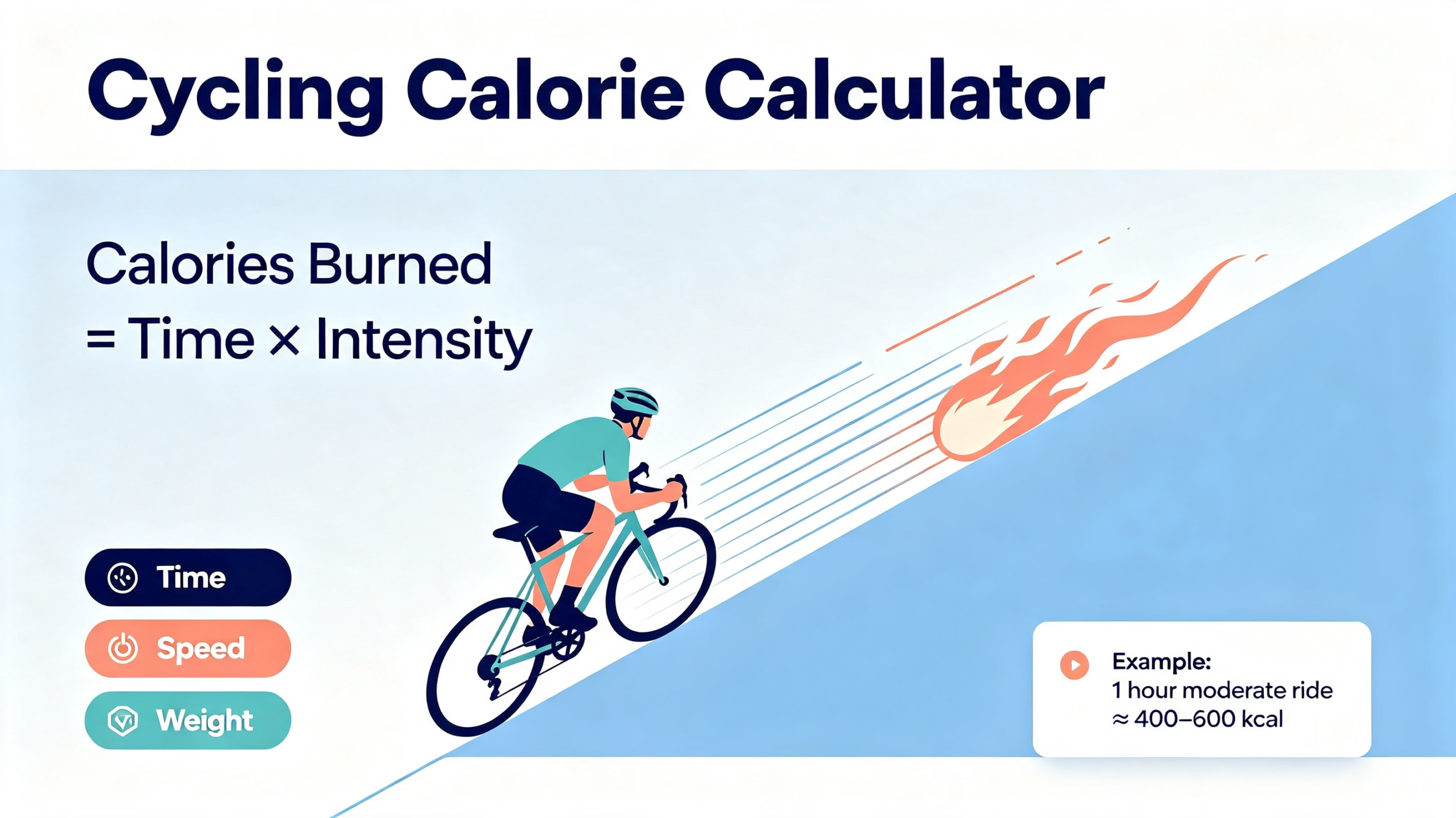
Our cycling calorie calculator helps estimate how many calories you burn while cycling based on your weight, riding time, distance, speed, and elevation. By understanding your calories burned cycling, you can create a more effective fitness plan and track your progress toward your weight loss goals.
Unlike many high-impact workouts, cycling reduces stress on joints while still providing excellent calorie-burning potential. This makes cycling a popular choice for people looking for a sustainable bike for weight loss solution.
Different types of bikes also affect calorie consumption. A fast road cycling session, an intense mountain biking adventure, and an easy electric bike commute can produce very different results.
Use our cycling calorie calculator below to estimate your personal calorie burn.
How Many Calories Does Cycling Burn?
The number of calories burned cycling depends on several factors, including body weight, cycling speed, terrain, riding duration, and bike type.
On average, cycling can burn between 200 and 1,000+ calories per hour depending on exercise intensity. A heavier rider or a cyclist riding at higher intensity will generally burn more calories.
The following table provides a general estimate of bike calories burned during different cycling activities:
| Ride Type | Calories/hour |
|---|---|
| Casual cycling | 250–400 calories |
| Road cycling | 400–800 calories |
| Mountain biking | 500–900 calories |
| E-bike riding | 200–500 calories |
These numbers are estimates. Your actual calorie burn may vary depending on your cycling intensity, fitness level, terrain, and riding conditions.
Cycling Calorie Calculator
Our cycling calorie calculator estimates your calorie expenditure by analyzing key riding information.
Enter the following details:
Weight
Your body weight is one of the biggest factors affecting cycling weight calories. A heavier rider requires more energy to move the bike, especially during climbing and acceleration.
Riding Time
Longer cycling sessions naturally increase total calorie expenditure. A 30-minute ride and a 2-hour cycling adventure can produce significantly different calorie results.
Distance
Distance helps estimate your overall workload. Longer rides usually mean higher total calories burned, especially when combined with higher speed or elevation.
Speed
Cycling speed reflects your exercise intensity. Faster cycling requires more power output and increases calorie consumption.
Elevation
Climbing requires significantly more effort than riding on flat terrain. Hills, trails, and elevation changes can dramatically increase calories burned cycling.
What Factors Affect Cycling Calorie Burn?
Rider Weight
Body weight plays an important role in determining calorie expenditure.
The more weight your body needs to move, the more energy you use during cycling. This is why cycling weight calories are usually higher for heavier riders compared with lighter riders completing the same ride.
For example:
- A 60 kg rider cycling at moderate intensity burns fewer calories than an 85 kg rider.
- Carrying additional equipment during mountain biking can slightly increase energy demand.
- Weight becomes especially important during uphill cycling.
Cycling Speed
Speed directly affects cycling intensity and calorie consumption.
A relaxed cycling speed requires less energy, while high-speed cycling increases muscle activation and cardiovascular demand.
Typical intensity levels:
| Cycling Speed | Intensity |
|---|---|
| Slow recreational riding | Low |
| Moderate cycling | Medium |
| Fast road cycling | High |
| Sprinting or racing | Very High |
Higher cycling intensity increases calories burned per hour because your muscles require more oxygen and energy.
Terrain and Elevation
Terrain has a major impact on cycling calorie burn.
Flat roads usually allow riders to maintain a steady pace, while trails and hills require repeated changes in effort.
Mountain biking burns more calories because trails require:
- climbing steep sections
- balance control
- frequent acceleration
- technical riding skills
- constant speed adjustments
During mountain biking, riders often switch between high-intensity climbs and recovery sections, creating a variable workout that can increase overall calorie expenditure.
This makes a mountain bike an excellent choice for riders who want a challenging outdoor workout.
Bike Type
The type of bike you ride also affects how many calories you burn.
Mountain Bike
A mountain bike is designed for trails, uneven terrain, and off-road riding. Because mountain biking involves climbing, handling obstacles, and controlling speed, it often produces higher calorie variation compared with steady road cycling.
Road Bike
A road bike is optimized for speed and efficiency. Road cycling usually provides a consistent aerobic workout, making it ideal for endurance training and long-distance fitness rides.
Electric Bike
An electric bike uses pedal assistance to reduce physical effort, but riders still burn calories through active pedaling. E-bikes are especially useful for commuting, beginners, and riders who want longer cycling sessions.
Cycling Calories Burned for Weight Loss
Cycling is a powerful tool for cycling weight loss because it helps increase calorie expenditure while being easier on joints compared with many traditional exercises.
Weight loss happens when:
Calories burned > Calories consumed
This means creating a consistent calorie deficit through exercise and nutrition.
Using a cycling calorie calculator allows you to estimate your daily cycling contribution and better plan your fitness routine.
For people searching for a bike for weight loss, cycling offers several benefits:
- Burns calories efficiently
- Improves cardiovascular health
- Builds lower-body strength
- Supports long-term exercise habits
- Can be adjusted from beginner to advanced levels
A combination of regular cycling, balanced nutrition, and progressive training is the most effective approach for sustainable fat loss.
Does Mountain Biking Burn More Calories Than Road Cycling?
Many riders wonder whether mountain biking burns more calories than road cycling.
The answer depends on riding style, terrain, and intensity.
| MTB | Road Cycling | |
|---|---|---|
| Terrain | Trail, dirt, uneven surfaces | Smooth roads |
| Intensity | Variable and explosive | Steady endurance |
| Calories | Higher variation | More consistent |
| Skill | Higher technical demand | Lower technical requirement |
Mountain biking often burns more calories because riders constantly adjust their effort. Technical climbs, rough terrain, and repeated acceleration require more muscular engagement.
Road cycling, however, can also burn significant calories during long-distance rides or high-speed training sessions.
Both options can support fitness and weight loss depending on your goals.
Indoor Cycling vs Outdoor Cycling Calories
Indoor cycling and outdoor cycling both provide effective calorie-burning workouts.
Stationary bike calories depend mainly on resistance level, workout duration, and cycling intensity.
Indoor cycling advantages:
- Controlled environment
- Easy intensity adjustment
- Convenient year-round training
Outdoor cycling advantages:
- Natural terrain variation
- Real-world riding skills
- More muscle engagement
- Outdoor enjoyment
A challenging outdoor ride with hills may burn more calories than an easy indoor cycling session, while a high-resistance indoor workout can produce similar results.
How We Calculate Cycling Calories
Our cycling calorie calculator uses established exercise science principles to estimate calorie expenditure.
The calculation considers:
MET (Metabolic Equivalent of Task)
MET measures the energy cost of physical activities compared with resting metabolism.
Cycling activities have different MET values depending on intensity:
- Leisure cycling has a lower MET value.
- Moderate cycling has a medium MET value.
- Mountain biking and high-intensity cycling have higher MET values.
The calculator combines MET values with body weight and duration to estimate calories burned.
Scientific Calculation Method
A common formula is:
Calories Burned = MET × Body Weight (kg) × Time (hours)
Additional factors such as speed, elevation, and cycling conditions influence the final estimate.
Cycling calorie calculations are estimates because real-world riding includes changes in terrain, wind resistance, rider fitness, and bike efficiency.
Frequently Asked Questions
How many calories does cycling burn in 30 minutes?
A 30-minute cycling session can burn approximately 100–500 calories depending on your weight, speed, terrain, and cycling intensity.
Does mountain biking burn more calories?
Yes, mountain biking can burn more calories than casual road cycling because trails require climbing, balance control, acceleration, and frequent changes in effort.
Is cycling good for losing belly fat?
Cycling can support overall fat loss by increasing calorie expenditure. However, targeted belly fat loss is not possible. Consistent cycling combined with a healthy diet helps reduce overall body fat.
How many miles should I cycle to burn 500 calories?
The distance required depends on your body weight and riding intensity. Some riders may burn 500 calories in around 10–20 miles, while others may need a longer distance.
Using a cycling calorie calculator provides a more personalized estimate.
Choose The Right Bike For Your Cycling Goals
Choosing the right bicycle can make your fitness journey more enjoyable and sustainable.
Whether your goal is losing weight, improving endurance, commuting, or exploring outdoor trails, selecting the right bike matters.
Mountain Bike
A mountain bike is ideal for riders who enjoy trails, adventure riding, and challenging workouts. The changing terrain creates a dynamic cycling experience with higher intensity.
Electric Bike
An electric bike is a practical choice for commuting, beginners, and riders who want assistance during longer rides while still staying active.
Road Bike
A road bike is perfect for speed-focused riders who want efficient long-distance training and endurance improvement.
At Meihanda, we design bicycles for different riding goals, including fitness training, daily commuting, and outdoor adventures.
Explore Meihanda bikes designed for fitness, commuting, and trail adventures.


