

Almost every carbon vs aluminum article is written by someone who has never watched a frame being welded. That is why the debate never resolves: it gets argued on the two axes that matter least — weight and marketing — and quietly skips the two that matter most, which are what you actually get at a given price, and how the frame is going to fail.
Meihanda has manufactured bicycles in Foshan, China since 2000, in 6061 aluminum, 7005 aluminum and carbon fiber, for our own range and for OEM clients. Frames sampled from each production order are ISO 4210 structural and fatigue tested, and the facility is BSCI social-compliance audited. We sell both materials, so we have no interest in telling you carbon always wins. What follows is the comparison we would give a friend who asked us across the workbench.
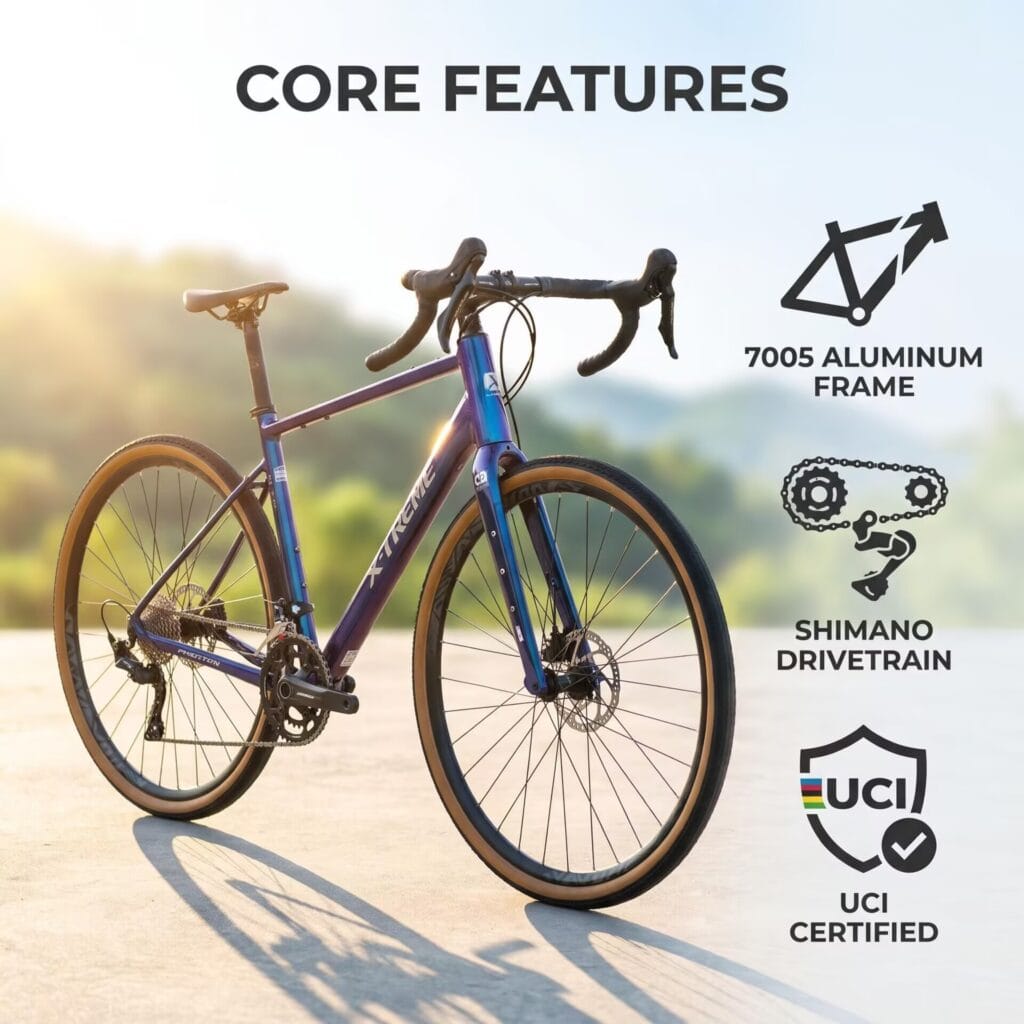
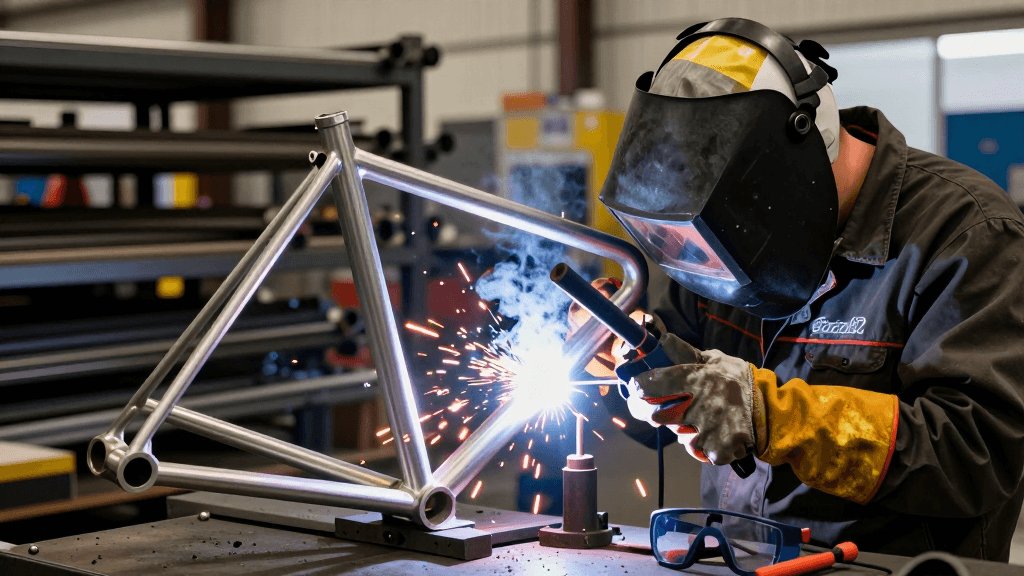
Straight from the factory: 6061 aluminum loses a meaningful amount of strength in the heat-affected zone around every weld, so after welding it has to go through a full solution heat treatment and artificial ageing cycle to recover it. 7005 tolerates welding better and recovers its strength through a less demanding ageing process. That single metallurgical difference is most of the reason 7005 frames cost more and appear on higher price tiers — it is not marketing, and it is not something a spec sheet tells you.
The short answer
Aluminum is the better frame material for most riders, and carbon is better for a specific kind of rider. Buy aluminum if you want the strongest complete bike for your money, you lock the bike outside, you crash occasionally, or your budget is under about $2,000. Buy carbon if you ride long distances regularly, you are chasing a personal best on climbs, or you are paying over roughly $2,500 where the carbon is genuinely good. Frame material affects fewer things than you have been told; the components bolted to it affect more.
What this guide covers
- How each frame is actually made
- Weight, honestly
- What T700 and T800 really mean
- Ride quality and comfort
- Durability, repair and crashes
- What each price point buys
- The combination we recommend
- How to inspect a frame
- The Meihanda frames
- Buyer’s checklist
- FAQ
How Each Frame Is Actually Made
The two materials reach a finished frame through completely different processes, and the process is what determines the price, the failure mode and the repair options. Not the material name.
Aluminum starts as extruded or drawn tubing — 6061 and 7005 are alloy designations from the International Alloy Designation System maintained by the Aluminum Association. The tubes are shaped under pressure — hydroforming is the common method — then cut, mitred and TIG-welded into a frame by hand. Welding generates localised heat that weakens the alloy in the heat-affected zone, so the frame then goes through a heat treatment cycle before it is aligned, faced and chased. That post-weld processing is a large part of the cost, and it is the step cheap frames skip.
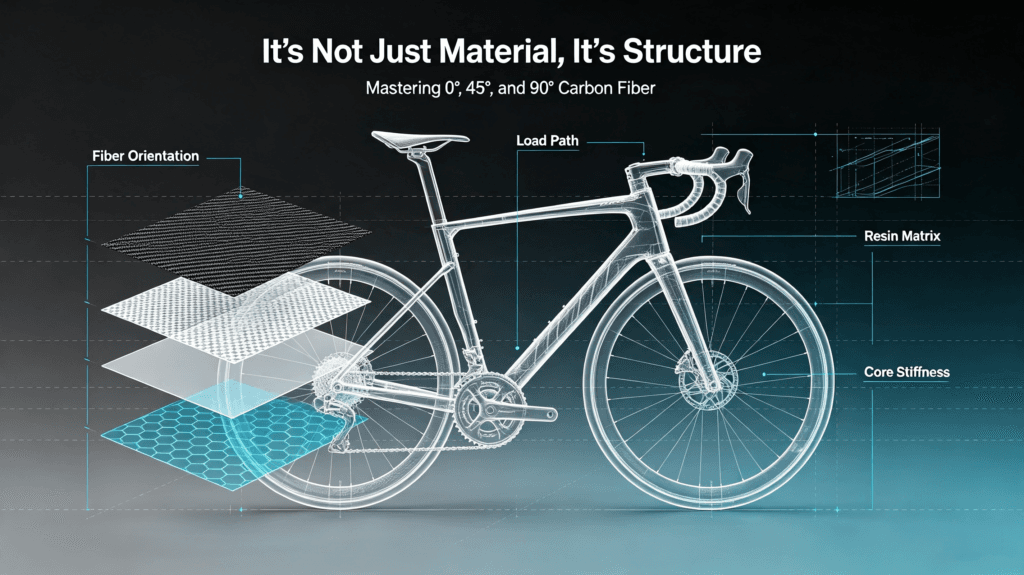
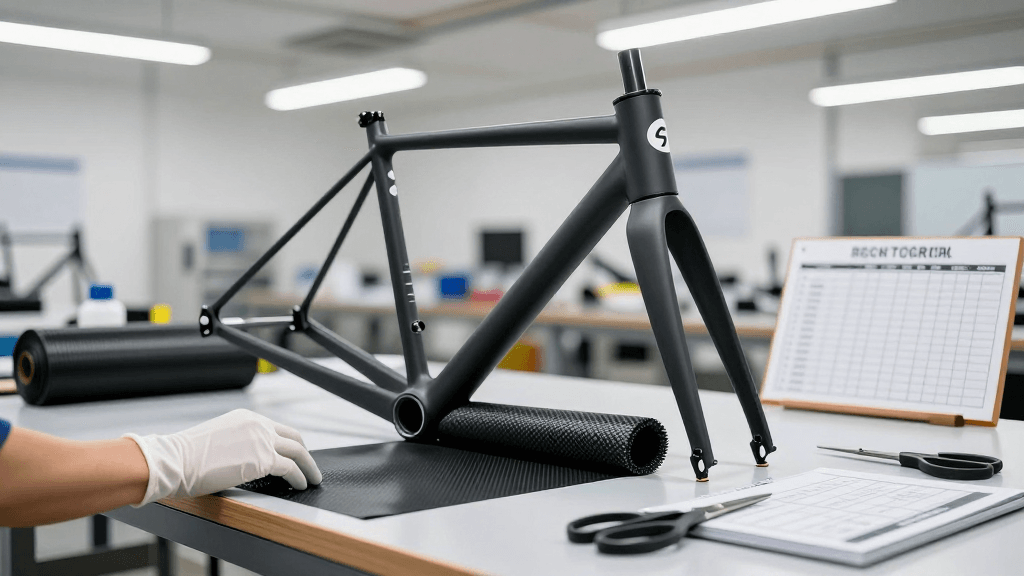
Carbon fiber starts as dry fibre tow woven into sheets, pre-impregnated with uncured resin, then cut into patterns and laid into a mould by hand. The layup schedule — which pieces, at which angle, in which order, at which thickness — determines every property of the finished frame. The assembly is then cured under heat and pressure in a mould or autoclave. There is no welding and no heat treatment, but there is a great deal of skilled labour.
| Aluminum | Carbon fiber | |
|---|---|---|
| Forming | Tubes hydroformed and TIG-welded | Sheets cut and laid into a mould |
| Joining | Welding, then heat treatment | Co-cured as one piece |
| Skill bottleneck | Welders and heat-treat capacity | Layup technicians |
| Tooling cost | Moderate | High |
| Labour per frame | Lower | Much higher |
The practical consequence: an aluminum frame is a manufacturing problem, and a carbon frame is a design problem. Aluminum quality is fairly consistent across factories because the process is well understood. Carbon quality varies enormously, because two frames built to the same “T800” label can be laid up completely differently.
Weight: The Numbers, Honestly
A quality aluminum road frame typically weighs 1,200–1,500 g. A high-end carbon road frame weighs 800–1,100 g. That is a real difference of roughly 300–500 g, which is about 0.7–1.1 lb at the frame alone.
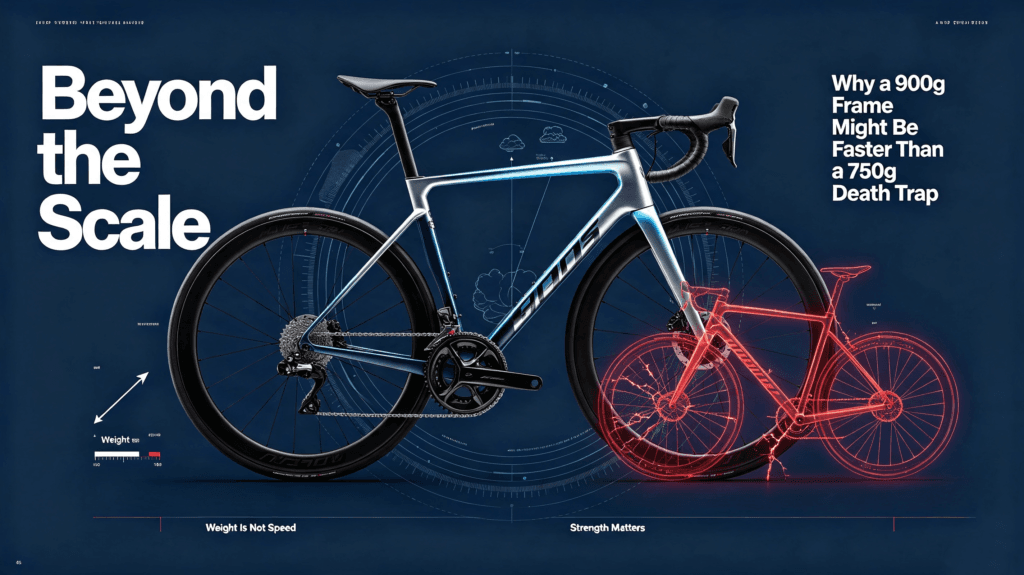
It is also a smaller difference than most buyers assume, and it comes with two caveats that the marketing never mentions.
Carbon is not automatically lighter. A low-grade carbon frame with a thick layup and high resin content can weigh more than a high-end aluminum frame, and it will usually ride worse. Carbon only becomes lighter when the layup is efficient, and efficient layups cost money.
Static weight matters less than rotating weight. A 400 g saving at the frame is worth less than a 400 g saving at the rims, because you accelerate the wheels every pedal stroke and the frame only once. If speed is your goal, wheels and tyres return more per dollar than the frame does — we went into that in detail in our breakdown of why a 900 g frame is not automatically faster than a 750 g one.
What “T800” Actually Tells You (And What It Doesn’t)
This is where buyers are most often misled, and it is the part only a manufacturer can explain properly.
T700, T800 and T1000 are fibre designations. They describe the tensile strength and stiffness of the raw fibre tow. A higher number is a stronger, stiffer — and more expensive — fibre. That is the whole of what the label means.
It says nothing about the frame, because a frame is not fibre. A finished carbon frame is fibre plus resin, and typically a third or more of its weight is resin, not fibre. The frame’s real behaviour comes from the layup schedule and the resin system:
- Fibre orientation. A frame’s stiffness comes from orienting plies at 0° for bending loads and 45° for torsion, with 90° plies resisting crushing at clamp points. Getting this wrong makes a frame that is stiff in the wrong directions and vague in the right ones. We wrote about the 0°, 45° and 90° layup in detail here.
- Resin content. Extra resin is cheap filler. It adds weight, reduces impact toughness, and makes a frame brittle. A high-resin frame can carry a premium fibre label and still be a bad frame.
- Voids and consolidation. If the layup is not properly compacted and cured under pressure, air pockets stay trapped in the laminate. Voids are the single most common cause of premature carbon failure, and they are invisible from outside.
So when a bike says “T800 carbon”, read it as “we bought decent fibre”. It is not a statement about how that fibre was used. An honest manufacturer will quote you an actual frame weight and a layup description; a brand that only quotes the fibre grade is telling you the one thing that is easy to say.
Ride Quality: Where the Marketing Oversells
The classic line is that carbon is “laterally stiff and vertically compliant” while aluminum is “harsh”. There is a grain of truth in it and a lot of nonsense.
Carbon genuinely can be tuned directionally — a designer can add compliance in one axis and stiffness in another in a way that a metal tube cannot. That is a real engineering advantage.
But on a complete bike, tyre width and pressure dominate comfort far more than frame material does. Going from a 25C tyre at 100 psi to a 30C tyre at 70 psi changes ride quality more than switching frame material ever will, and it costs nothing. If your aluminum bike feels harsh, the first thing to change is not the frame. We cover the numbers in our bike tyre pressure guide.
| Aluminum | Carbon fiber | |
|---|---|---|
| Natural character | Firm, direct, communicative | Damped, quieter |
| Can be tuned directionally | Limited | Yes, extensively |
| Cost to improve comfort | Wider tyres, carbon fork, carbon seatpost | Already built in |
| Where you feel the difference | Long rides, rough surfaces | Long rides, rough surfaces |
Where carbon’s advantage is real: rides over about two hours, over rough or broken surfaces, accumulate into noticeably less fatigue in your hands, back and shoulders. On a 40-minute commute it is close to undetectable.
Durability, Repair and Crashes
Both materials are strong. They fail differently, and the difference matters more than the strength figures.
Aluminum fails visibly. It dents, then bends, then cracks. You will usually see the damage before it becomes dangerous. Its weakness is cumulative fatigue: aluminum has a finite fatigue life, and a frame ridden very hard for many years can develop cracks. In practice, a well-made aluminum frame used normally lasts well over a decade. Aluminum can be welded by a specialist frame builder, but it is rarely economical and the repair will not restore the original heat treatment.
Carbon is stronger in the directions it was designed for and more fragile outside them. It handles pedalling loads, cornering loads and vibration essentially indefinitely. What it does not handle well is a sharp point impact — a crash, a dropped bike, a pedal strike — or a bolt tightened past the specified torque. The dangerous part is that the surface can look perfect while a delamination spreads underneath. Carbon can be repaired by a specialist, often to full strength, which aluminum usually cannot.
The factory rule we would give anyone: buy a torque wrench before you buy a carbon frame. Almost every avoidable carbon failure we see starts with a seatpost clamp, stem bolt or bottle cage bolt tightened by feel. If a frame does not come with a printed torque chart, that is a warning sign about the manufacturer, not the material.
| Aluminum | Carbon fiber | |
|---|---|---|
| Typical failure | Dents, bends, then cracks | Cracks, often from point impact |
| Damage visibility | Usually obvious | Can be invisible |
| Fatigue life | Finite | Effectively unlimited under designed loads |
| Repairable | Rarely economical | Yes, by a specialist |
| Crash tolerance | Better | Worse |
| Over-torque risk | Low | High — use a torque wrench |
What You Actually Get at Each Price Point
This is the honest version of the comparison, and it is where most buyers go wrong. At any given price, aluminum buys you better components — and components affect every single ride, while frame material affects a narrower set of things.
| Budget | What aluminum buys | What carbon buys |
|---|---|---|
| Under $700 | Aluminum frame, carbon fork, hydraulic discs, 9-speed wide-range groupset | Nothing worth buying — carbon at this price is a marketing frame |
| $700–1,000 | Aluminum frame, T800 carbon fork, hydraulic discs, 11-speed, thru-axles, internal routing | Still nothing — a $900 “carbon” bike means a bad layup and a worse groupset |
| $1,000–1,500 | Excellent aluminum with 11–12 speed, lighter wheels, UCI-certified frames on some models | Entry carbon, but usually with a downgraded groupset to hold the price |
| $1,500–2,500 | Top-tier aluminum, near the practical ceiling | Mid-grade carbon becomes genuinely good here |
| $2,500+ | Aluminum has no meaningful place | High-grade carbon, good layup, premium groupsets |
The trap is the $1,300–1,900 band. That is where brands put a carbon frame on a bike and then claw the money back out of the drivetrain, the brakes and the wheels. A $1,400 aluminum bike with a proper 11-speed groupset and hydraulic discs will be lighter, faster and more reliable in real use than a $1,800 carbon bike with a low-grade layup and downgraded parts. The frame is the part you notice least on a ride; the groupset and wheels are the parts you notice every time you shift or brake.
The Combination We Recommend: Aluminum Frame, Carbon Fork
There is one honest hybrid that captures most of carbon’s benefit for a fraction of its cost, and it is the combination we build across our own range: an aluminum frame with a carbon fiber fork.
The reasoning is straightforward. Carbon’s real advantages are directional damping and low weight at the front end — the fork, the bars, the seatpost. The front of the bike is where vibration reaches your hands and where a weight saving most improves steering feel. A carbon fork does that job for a small fraction of the price of a full carbon frame, while keeping the durable, crash-tolerant, repairable-in-practice aluminum structure underneath.
| Aluminum frame + carbon fork | Full carbon frame | |
|---|---|---|
| Weight vs all-aluminum | Around 300–500 g lighter at the front | 300–500 g lighter overall |
| Vibration at the bars | Largely addressed | Addressed |
| Crash tolerance | Good | Lower |
| Cost | Modest premium over all-aluminum | Large premium |
| What you give up | A few hundred grams | — |
This is not a consolation prize. It is the specification we would choose ourselves for anything under about $2,000, and it is why 7005 aluminum paired with a T800 carbon fork is the configuration running through our gravel and road lines.
How to Inspect a Frame Like a Factory Would
You cannot see inside a carbon layup from a showroom floor, but you can tell a great deal about whether the manufacturer knows what they are doing.
For any frame:
- Check that the manufacturer quotes an actual frame weight, not just a fibre grade or a vague “lightweight”.
- Look for a printed torque specification chart. Its presence tells you the maker expects you to maintain the bike correctly.
- Read the warranty terms for the frame specifically, and note whether crash replacement is offered.
- Ask who makes the frame. A brand that will not say is usually buying from an unknown source with no traceable QC.
- On aluminum, look at the welds: uniform, evenly stacked beads. Lumpy, inconsistent welds suggest rushed heat control, which means a weaker heat-affected zone.
For carbon specifically:
- Ask for the layup description, not the fibre grade. A maker who can describe ply orientation and target stiffness is a maker who designed the frame.
- Inspect the bottom bracket shell, head tube and dropouts for ripples, voids, wrinkles or visible resin-rich patches. These are the areas where poor consolidation shows.
- Weigh the bike. If a carbon frame with a premium fibre label produces a complete bike no lighter than an aluminum one at the same spec, the layup is not doing its job.
The Meihanda Frames
Our gravel and road lines are built around 7005 aluminum frames paired with T800 carbon fiber forks, UDH derailleur hangers and full internal cable routing. The Phantom gravel range runs from $699 to $959 across three drivetrain tiers. Our road frames certified to UCI standards sit higher up the range.
| Model | Frame | Price |
|---|---|---|
| Phantom gravel series (100 / 500 / 700) | 7005 aluminum, T800 carbon fork | $699 – $959 |
| Phantom Flat Bar Gravel Road Bike | 6061 aluminum, carbon fork | $918 |
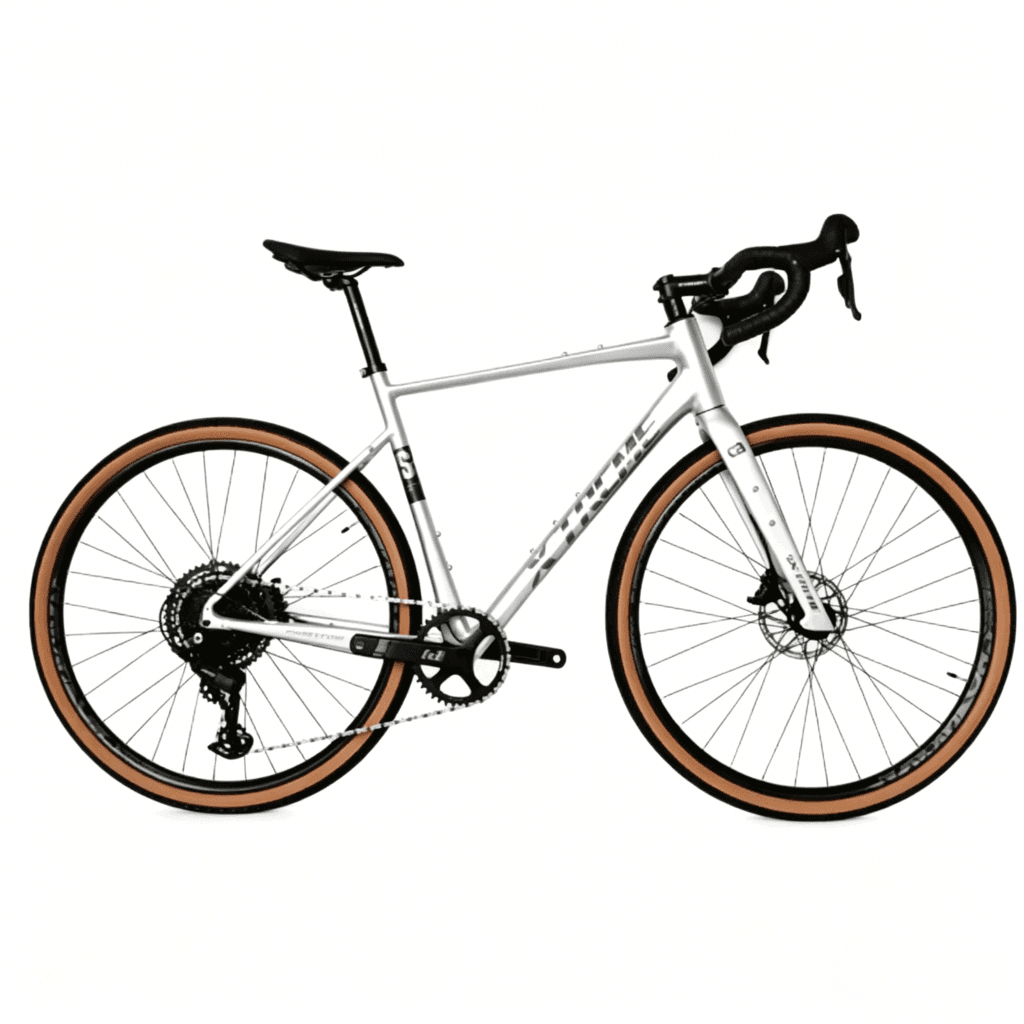
| X-TREME Gravel Road Bike | UCI-certified 7005 aluminum + carbon, Shimano groupset | $1,400 |
| Lucky Carbon Fiber Flat Handlebar Road Bike | Carbon fiber | $1,410 – $1,470 |
| Xtreme Phantom P10 | 7005 aluminum, T800 carbon fork, hydraulic discs | $2,300 |
View the Meihanda Xtreme Phantom Series →
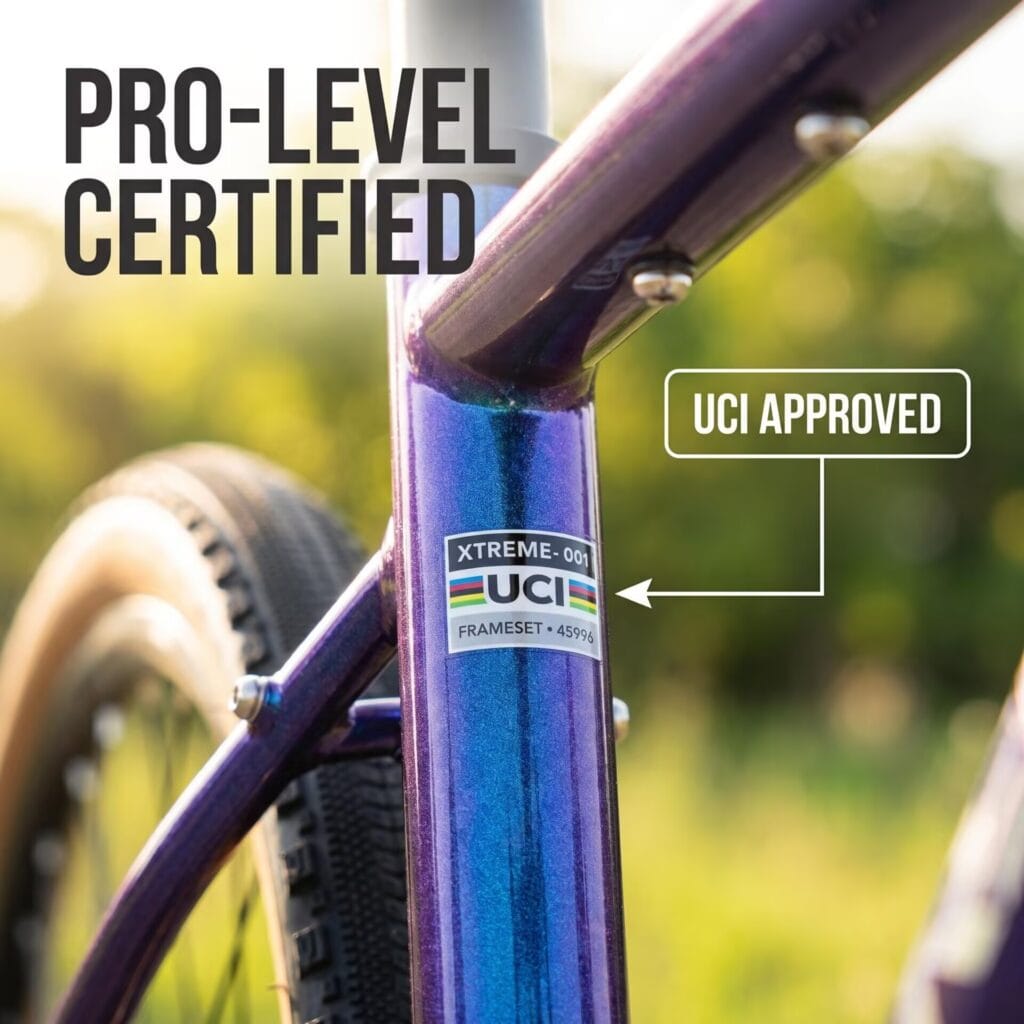
Also in the range: the X-TREME Gravel Road Bike with a UCI-certified frame at $1,400, the Lucky carbon fiber flat-bar road bike from $1,410, or browse the full road bike, gravel bike and mountain bike ranges.
Why buy direct from Meihanda
- Factory-direct pricing — you buy from the manufacturer, not a middleman
- Pre- and post-purchase support from the team that builds the bike
Meihanda has manufactured bicycles at our own factory in Foshan, China since 2000. Frames sampled from each production order are ISO 4210 structural and fatigue tested, and the facility is BSCI social-compliance audited.
Carbon vs Aluminum Bike Frame Buyer’s Checklist
- ☑ Decide on components before material — at a fixed budget, a better groupset beats a lighter frame
- ☑ Ask for the actual frame weight, not the fibre grade
- ☑ For carbon, ask for the layup description and refuse to buy on the T-number alone
- ☑ Confirm the frame has a printed torque specification chart
- ☑ Read the frame warranty and check whether crash replacement exists
- ☑ Inspect welds on aluminum, and the bottom bracket and head tube area on carbon
- ☑ Budget for wider tyres before you budget for a new frame — comfort per dollar is far higher
- ☑ Under $2,000, seriously consider aluminum frame with a carbon fork instead of entry carbon
Frequently Asked Questions
Is a carbon frame worth the extra money?
Only above roughly $2,500, where the carbon is genuinely well made. Below that you are usually buying a carbon frame at the expense of the groupset, brakes and wheels — and those affect the ride more. A $1,400 aluminum bike with proper 11-speed and hydraulic discs is a better bike than an $1,800 carbon one with downgraded parts.
Is aluminum less comfortable than carbon?
Less damped, yes, but the difference is smaller than the marketing suggests and is easy to close. Fitting wider tyres at lower pressure changes comfort more than changing frame material does, and a carbon fork and seatpost remove most of the remaining gap. On short rides most riders cannot tell the difference.
Can a carbon frame be repaired?
Yes. Carbon damage can be repaired by a specialist, often restoring full strength, which is something aluminum frames rarely justify economically. The catch is diagnosis: carbon damage can be invisible from the outside, so any frame that has taken a hard impact should be inspected by someone experienced in carbon repair before you keep riding it.
Does a carbon frame last longer than aluminum?
In fatigue terms, usually yes. Carbon does not progressively weaken under normal pedalling loads the way aluminum does, so a well-made carbon frame can effectively last indefinitely if it is never seriously impacted. Aluminum has a finite fatigue life, though a well-made frame used normally lasts well over a decade. Carbon’s risk is impact damage, not fatigue.
Which frame material is better for a gravel bike?
Aluminum with a carbon fork is the sensible default, and it is what we build. Gravel riding involves drops, rock strikes and constant surface abuse — conditions where aluminum’s tendency to dent rather than shatter and its lower cost of ownership are real advantages. Move to full carbon only if you are riding long gravel distances regularly and your budget is well above $2,000.
Is carbon always lighter than aluminum?
No. It is lighter only when it is well made. Low-grade carbon with a thick layup and high resin content can weigh more than a good aluminum frame while riding worse. Fibre density is roughly half that of aluminum, but a finished frame is mostly layup and resin, so the label alone predicts nothing. Ask for the real frame weight.
Ready to choose a frame?
Tell us how you ride, your height and your budget and we will tell you honestly whether you need carbon or not: talk to our team →, or start with the gravel bike and road bike ranges. If you are still working out sizing, our complete bike size and fit guide is a good next read.
How this guide was written. This guide reflects Meihanda’s in-house frame production at our own factory in Foshan, where we have manufactured 6061 and 7005 aluminum and carbon fiber bicycles since 2000; frames sampled from each production order are ISO 4210 structural and fatigue tested, and the facility is BSCI social-compliance audited. The material and process details are drawn from our own frame production experience, not from secondary sources, and the price bands reflect what we and our competitors actually build at each tier. Frame weights, resin ratios and tyre-pressure figures are industry-typical ranges, not guarantees — they vary with frame size, layup, rider weight and setup. Prices are current in USD and may vary by configuration and destination. Last reviewed September 14, 2026.
Related Reading
Deciding how to manufacture custom frames? Compare the two sourcing models in OEM vs ODM carbon bike frames, then follow our step-by-step guide to ordering custom OEM carbon frames from China.


