

Every cyclist knows the feeling. You finish a great ride, your legs are tired, and the last thing you want to think about is where to put your bike. So you lean it against the wall, slide it into a corner, or—worst of all—leave it outside.
Big mistake.
How you store your bike directly impacts how long it lasts, how well it performs, and how much money you’ll spend on repairs. Proper bike storage isn’t just about keeping your garage tidy—it’s about protecting your investment and ensuring your bike is ready to ride whenever you are.
This guide covers everything you need to know: from pre-storage preparation to indoor and outdoor storage solutions, plus the common mistakes that could be destroying your bike without you even realizing it.
Before You Store: The Critical Prep Work
Think of bike storage like putting away winter clothes. You wouldn’t toss a muddy, wet jacket into your closet and expect it to be fine next season. Your bike deserves the same consideration.
Clean It Thoroughly
This is non-negotiable. Dirt, dust, and grime aren’t just unsightly—they’re essentially tiny sandpaper particles that slowly wear down your moving parts. Mud and road salt are particularly corrosive; left on your bike, they’ll eat away at your drivetrain, chainrings, and cables.
Before storing your bike, give it a proper wash:
- Rinse off mud and debris with a gentle spray (avoid high-pressure washers—they force water into bearings)
- Use warm soapy water and a soft brush for the frame and components
- Clean and degrease the chain and gears
- Dry everything thoroughly
- Apply fresh lubricant to the chain and moving parts to protect against rust
Check Tire Pressure
Tires lose air naturally over time. If you’re storing your bike for more than a few weeks, inflate tires to the recommended pressure before storage. This helps prevent flat spots from forming where the tire meets the ground. For long-term storage, consider hanging the bike so tires are completely off the ground.
Loosen Drivetrain Tension
Shift your gears so the chain sits on the smallest chainring and the smallest rear cog. This reduces tension on cables and springs, preventing them from stretching or weakening over time.
Remove Accessories
Take off lights, computers, bags, and GPS mounts. Store them separately in labeled bins so they’re easy to find when you’re ready to ride again.
Indoor Bike Storage: Solutions for Every Space
Indoor storage is always preferable. It protects your bike from weather damage, theft, and temperature extremes. But not everyone has a spacious garage. Here are solutions for different living situations.
For Apartments and Small Spaces
Vertical Wall Mounts are the gold standard for tight quarters. These racks let you store your bike with wheels perpendicular to the wall, ideally positioned in a corner—they take up the least floor space of any option. Some mounts even fold flat against the wall when not in use.
Horizontal Wall Mounts hold the bike by the top tube, keeping it closer to the wall than wheel-hanging options. This reduces the chance of bumping into it and scuffing your walls.
Freestanding Vertical Racks are another excellent choice, especially for apartments where drilling into walls isn’t an option. These lean against the wall or stand independently, and many models can stack up to two bikes. They’re also foldable, making them easy to tuck away when not in use.
For Garages and Houses
With more space comes more options. Garage storage solutions can be as simple or elaborate as you like.
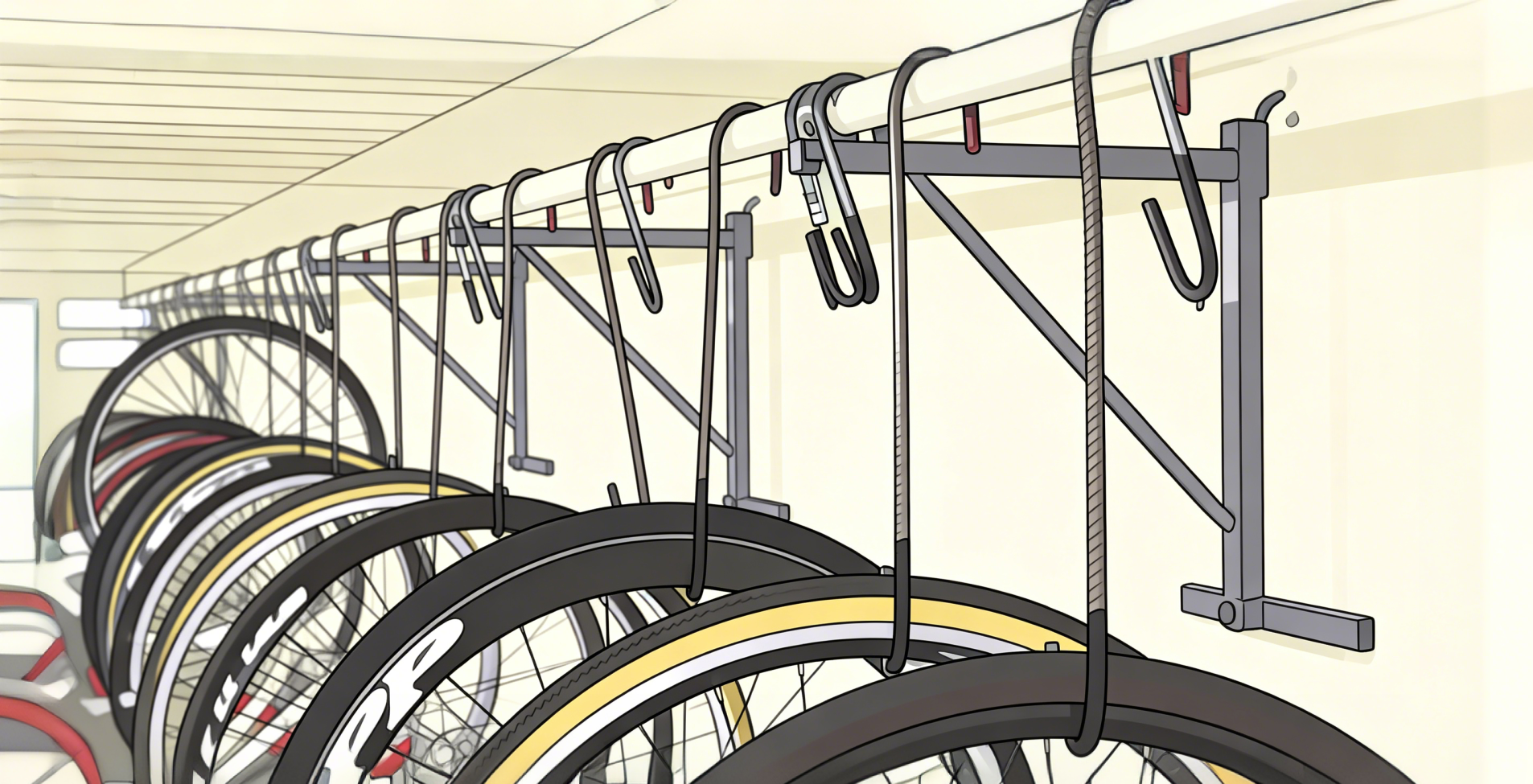
Ceiling Hooks and Pulley Systems make use of vertical space that would otherwise go unused. If your ceiling is high enough, a bike stored this way won’t interfere with your living space at all.
Pallet Parking is a surprisingly clever and budget-friendly option. You can often get pallets for free from local bike shops or retailers. Lay one down flat for easy parking of three or four bikes, or cut it in half and position the long ends against a wall for even more capacity.
Vinyl-Coated Screw Hooks mounted to wall studs are a simple, effective way to hang bikes by their rims. The vinyl coating protects aluminum rims from scratches or dents.
Key Considerations for Indoor Storage
- Wall Quality and Bike Weight: Before mounting anything to your wall, consider the combined weight of bike and rack. You don’t want your bike crashing down. If you’re renting, check with your landlord before drilling into walls or ceilings.
- Wall and Floor Protection: If you’re storing bikes in your living space, look for racks with plastic housings to keep tires off floors and walls, or wide plates under wheel contact points. Racks that extend out from the wall also help keep dirt and grease off your surfaces.
- Wheel Size Compatibility: Not all racks fit all bikes. If you’re storing a mountain bike with wide tires or a 29er, double-check that the rack’s wheel wells can accommodate your tire width.
- Clearance Space: Remember to account for handlebar width and door clearance when positioning your storage solution.
Outdoor Bike Storage: When Indoors Isn’t an Option
Sometimes indoor storage just isn’t feasible. Maybe your garage is already full, or you live in an apartment without wall space. Outdoor storage can work—but it requires more careful consideration.
The Security Priority
If your bike is stored outdoors, security should be your top concern. Look for products that are Sold Secure rated—this means they’ve been rigorously tested and certified to resist theft. Even within a locked shed or garage, using additional bike locks adds an extra layer of protection and peace of mind.
Sheds and Lockers
Dedicated bike sheds offer the best outdoor protection. High-quality options come with features worth paying for:
- Five-point locking systems with deadbolts
- Ventilation to prevent damp buildup
- Weatherproof construction that keeps rain and moisture out
- Heavy weight that makes them difficult to steal or move
One warning about metal sheds: they can heat up significantly in direct sunlight. Don’t let any part of your bike—especially handlebars or tires—touch hot metal. Place cloths between the bike and the shed walls, or install insulation.
Floor Anchors and Ground Stands
For small outdoor spaces, floor anchors provide a basic but effective solution. A freestanding storage stand that keeps your bike off the ground is suitable for both home and outdoor use, and many are foldable for convenience.
The “Out of Sight” Principle
The less people see your bike, the safer it is. If you must store it outside, keep it covered and out of plain view. Motion-sensor lights are cheap and effective deterrents.
Common Bike Storage Mistakes (And How to Avoid Them)
Mistake #1: Leaving Your Bike Outside Unprotected
Rain, snow, UV damage, ice, and temperature swings will eat your bike for breakfast. Rust forms on chains and components. Tires degrade from UV exposure. And if you’re unlucky, insects and critters might take up residence in your frame or cables.
The fix: Always store your bike indoors or in a weatherproof shed. No exceptions.
Mistake #2: Storing Without Cleaning
That mud from your last ride isn’t just dirt—it’s abrasive grit that will grind away at your drivetrain components. Road salt accelerates corrosion. Moisture leads to rust.
The fix: Clean your bike after every ride, especially if it’s been wet or muddy. Take the extra 30 minutes—your bike gave you a full day of fun, and it deserves the care.
Mistake #3: Keeping Your Bike in the Car
This seems clever—your bike is always ready to go, right? Wrong. Cars heat up like ovens in summer, cooking tires, brake fluid, and rubber seals. In winter, extreme cold stiffens suspension, makes hydraulic brakes spongy, and leaves your frame freezing cold. Plus, every turn and brake causes your bike to shift and rattle, subtly damaging both bike and vehicle.
The fix: Unload your bike after every ride. Store it properly.
Mistake #4: Ignoring Temperature and Humidity
Ideal storage conditions are a cool, dry place with stable temperatures between 50°F and 70°F and humidity below 50%. High humidity causes rust; extreme temperatures damage components. Avoid storing bikes near heat sources like furnaces.
The fix: Choose a climate-controlled space for long-term storage. If using a storage unit, opt for indoor, climate-controlled units.
Mistake #5: Using Plastic Tarps as Covers
Plastic traps moisture underneath, creating a humid microclimate that promotes rust.
The fix: Use a breathable bike cover or a clean cotton sheet.
Short-Term vs. Long-Term Storage
Short-Term (Days to Weeks)
- Wipe down the bike after each ride
- Keep tires inflated
- Use a stand or rack—don’t lean it against walls
- Store in an easily accessible spot
Long-Term (Months to Years)
- Deep clean everything
- Lubricate all moving parts
- Loosen drivetrain tension
- Remove and store accessories separately
- Elevate tires off the ground
- Use a breathable cover
- Check periodically—tires lose air, and seals can dry out
Choosing the Right Storage Solution: A Quick Decision Guide
Final Thoughts
Your bike is built to move—but when it’s not moving, how you store it matters more than you might think. A few minutes of preparation after each ride, combined with the right storage solution for your space, will keep your bike performing at its best for years to come.
The golden rules:
- Store indoors whenever possible
- Clean before storing—every time
- Keep tires off the ground for long-term storage
- Protect from temperature extremes and moisture
- Secure it properly—even indoors
Get these basics right, and your bike will be ready to roll whenever you are—no flat tires, no rusty chains, no unpleasant surprises. Just smooth pedaling ahead.